Persephone
Pele
Pele
Couldn't load pickup availability
Share
On volcanic slopes, tiny flashes of green sometimes appear amid the black stone. They are peridots - one of the gems formed deep within the Earth's mantle and carried upward by volcanic or tectonic forces.
According to storytellers, peridots are the tears of a goddess, fragments of sunlight, and symbols of protection against the darkness.
Few gemstones possess a mythology as diverse as the peridot. Across oceans and millennia, civilisations found meaning in the stone's luminous green glow.
In Hawaiian tradition, the peridot is associated with Pele, not the football legend, but the goddess of volcanoes and fire. They describe her as both creator and destroyer, a deity whose passions and temper shaped the very landscape of the islands. As lava poured from volcanic craters and cooled into new land, stories emerged that the green gems found among the rocks were the tears of the goddess. Whether shed in grief, anger, or longing, these tears are seen as beauty birthed by fire. Like Pele, the peridot is strong and like Pele it is also sensitive to certain things. Acid from perfume can degrade it. Too much heat can also cause damage.
Thousands of miles away from the volcanic soil of Hawaii, another civilisation found its own meaning in the stone.
The ancient Egyptians called peridots the "Gem of the Sun." For more than three thousand years, miners extracted the crystal from the remote island of Zabargad in the Red Sea. Ancient accounts describe the stone as possessing a radiant inner light, so brilliant that some believed it remained visible after sunset.
Egyptian priests and nobles prized the gem for its perceived protective power. It was thought to repel evil spirits, ward off nightmares, and invite divine favour. Some historians believe that certain gems once described as emeralds in antiquity may in fact have been peridots, their vivid green colour inspiring wonder among those who encountered them.
Medieval Europe added another chapter to the stone's mythology. There, the peridot became associated with protection against enchantment and misfortune. Travelers carried it as a talisman, believing it could dispel fear and strengthen the spirit. In some legends, large crystals were imagined as treasures guarded by dragons, their green brilliance resembling scales illuminated by firelight.
Across Asia, green gemstones have long symbolised prosperity, harmony, renewal, and balance with nature. While jade occupied the highest cultural position in many East Asian traditions, the peridot's vibrant colour connected it to similar themes of growth, vitality, and the returning abundance of spring.
Human beings have always sought meaning in the natural world. A green crystal emerging from volcanic rock, glowing with a colour that reminds them of leaves, forests, and new life, naturally invited stories of rebirth.
Peridots existed in conditions that would destroy most things. The same paradox often appears in human character. It is plain to see that in both, extraordinary beauty can emerge from immense forces.
The people who possess the greatest depth, wisdom, and compassion are rarely those who have known only comfort. More often, they are individuals who have endured disappointment, loss, sacrifice, uncertainty, or hardship. The pressure does not automatically make them stronger—many are broken by it—but those who emerge with grace possess a strength that cannot be acquired through ease alone.
Seneca wrote, "Fire tests gold; adversity tests the brave." Like gold in a furnace, character reveals itself under trial. Adversity strips away pretenses and exposes what is genuine.
Friedrich Nietzsche expressed a similar idea: "What does not kill me makes me stronger,” but perhaps no writer captured this more beautifully than Kahlil Gibran who wrote that, "the deeper that sorrow carves into your being, the more joy you can contain." Except narcissists and those with maladaptive personalities. You are not included here.
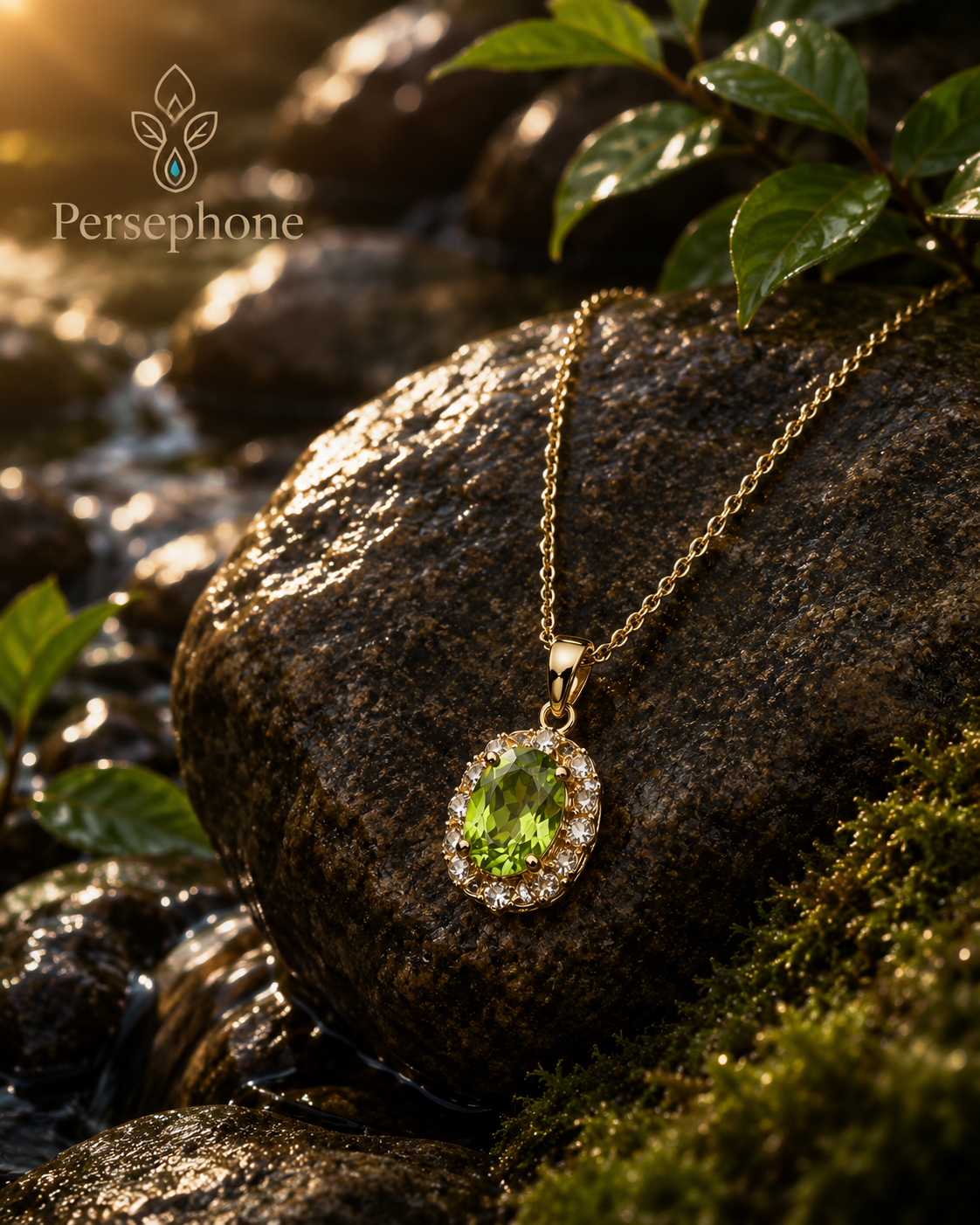
This piece is made from peridot and zirconia. The metal used is gold-plated sterling silver.